


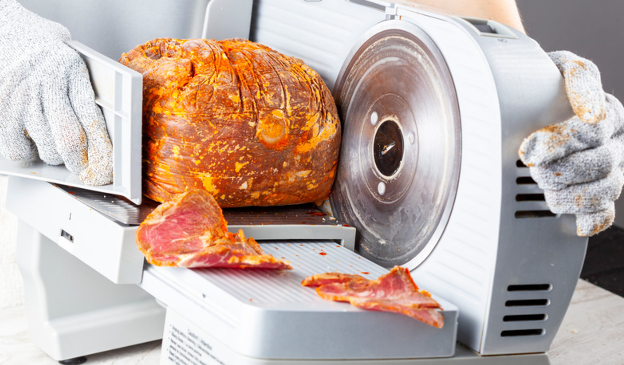
In the culinary world, precision and efficiency are paramount. A meat slicer is an indispensable tool for achieving uniform slices of meats, cheeses, and other foods, enhancing both presentation and portion control. This guide delves into the various types of meat slicers, their features, and essential considerations to help you select the perfect slicer for your kitchen.
Types of Meat Slicers
Manual Meat Slicers
Manual meat slicers are operated by hand, offering the user complete control over the slicing process. They are ideal for establishments with lower slicing volumes or for those who prefer a hands-on approach.
Key Features:
- Control: Allows for precise thickness adjustments.
- Maintenance: Generally easier to clean due to simpler mechanisms.
- Cost-Effective: Typically less expensive than electric models.
Electric Meat Slicers
Electric meat slicers are powered by motors, making them suitable for high-volume slicing tasks. They reduce manual effort and increase efficiency in busy kitchens.
Key Features:
- Efficiency: Capable of slicing large quantities quickly.
- Consistency: Delivers uniform slices with minimal effort.
- Versatility: Often equipped with adjustable settings for various thicknesses.
Automatic Meat Slicers
Automatic meat slicers are advanced electric slicers that can operate without continuous manual intervention. They are ideal for establishments requiring consistent slicing over extended periods.
Key Features:
- Automation: Can be set to slice at specific intervals and thicknesses.
- Productivity: Frees up staff for other tasks during operation.
- Safety: Reduces the risk of injury by minimizing direct contact.
Flywheel Meat Slicers
Flywheel meat slicers are manually operated using a hand-cranked wheel. They are often favored for their traditional design and precision, especially in slicing delicate products like prosciutto.
Key Features:
- Aesthetics: Adds a vintage charm to any setting.
- Precision: Allows for extremely thin and consistent slices.
- No Electricity Required: Operates without power, suitable for locations without electrical access.

Key Considerations When Choosing a Meat Slicer
Blade Size
The blade size determines the types of products you can slice.
- Small Blades (Under 10 inches): Suitable for light-duty tasks and smaller items.
- Medium Blades (10-12 inches): Ideal for most general slicing needs.
- Large Blades (12 inches and above): Designed for heavy-duty slicing and larger products.
Motor Power
The motor's power affects the slicer's performance and suitability for different tasks.
- Low Power (Under 0.5 HP): Best for light-duty slicing.
- Medium Power (0.5 - 1.0 HP): Suitable for moderate use.
- High Power (Above 1.0 HP): Designed for continuous, heavy-duty slicing.
Construction Material
The build quality influences durability and hygiene.
- Stainless Steel: Resistant to corrosion and easy to clean.
- Aluminium: Lightweight and durable but may require more maintenance.
Safety Features
Safety is paramount when operating meat slicers.
- Blade Guards: Protects the user from accidental contact.
- Non-Slip Feet: Ensures stability during operation.
- Safety Switches: Prevents accidental start-ups.
Maintenance and Cleaning
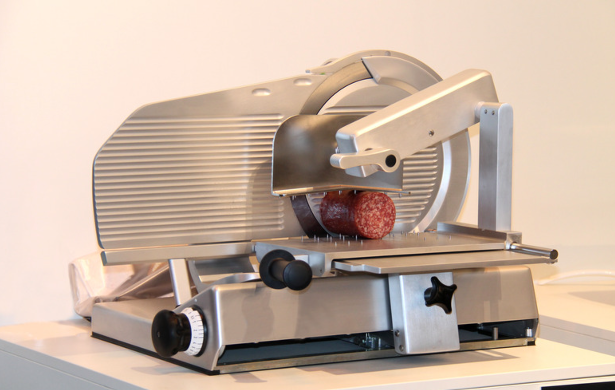
Proper maintenance extends the lifespan of your meat slicer and ensures food safety.
- Regular Cleaning: Disassemble and clean all parts after each use to prevent bacterial growth.
- Blade Sharpening: Keep the blade sharp to maintain slicing efficiency and reduce strain on the motor.
- Inspection: Regularly check for worn parts and replace them as needed.
Suggested Diagram: Meat Slicer Components
Selecting the right meat slicer involves understanding your specific needs, the types of products you'll be slicing, and the volume of work. By considering the various types of slicers, their features, and maintenance requirements, you can make an informed decision that enhances efficiency and safety in your kitchen.