


To optimise food preservation and minimise food wastage, using the right food storage products is essential. You will need high quality storage containers, flour buckets, ingredient bins, shelving and storage racks in all shapes and sizes to keep food separated and ready to prepare. This helps with reducing food handling, cross contamination and by keeping food at the right temperature can protect the quality and prevent bacteria and pests that may cause foodborne illnesses. Another advantage is by using the first in, first out process, this helps you use oldest acceptable foods first, ensuring you never serve out-of-date food as allows you to label your food containers.
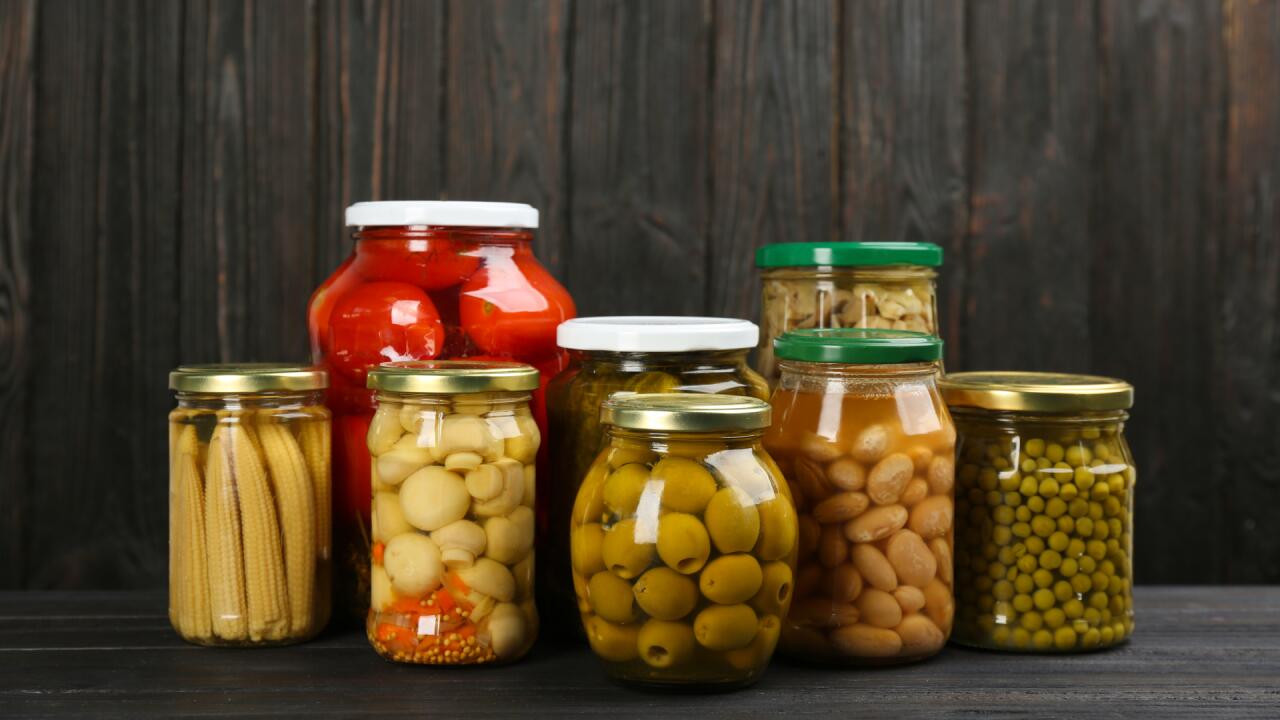
How To Store Food Safely
To extend the life of your fresh goods and save you money, choosing the right food containers and storage method is definitely important. Food safety is a major factor in any café or restaurant and improper preparation and handling are seen as a major causes of foodborne illnesses. Food storage is overlooked, but if this is done incorrectly, it is as much to blame as poor food preparation for cross contamination. It is crucial to plan and implement proper storage solutions.
Stock Rotation
Rotating of stock is very important in any restaurant or café. By using the first in, first out method (also known as FIFO), makes sure that food closest to its use by date is used before it will go off. This is a simple task and extremely effective to stop old foods being left at the back of shelves and fridge/freezers. It also reduces your food wastage as everything should be used before it goes off.
Food Labelling
For best results, making sure your kitchen staff are aware of what’s what by labelling all your stock as soon as it arrives. As an inexpensive method is sticky labels for displaying your use-by-dates. By doing this as soon as stock arrives and putting it in your FIFO system will ensure you have the right control and organisation of your inventory. They are also a good way to separate potential hazardous foods, like allergens.
Storing Meats
Always store your meat products are the bottom of the fridge or shelves of your storing racks, as by putting them on the top can increase the risk of cross contamination as meat juices can spill and drip onto other produce stored below. Dunnage racks can be used to give you more food space under shelves if needed. They raise the contents off the floor to prevent pests and damp too. If possible, separate fridges should be used for storing of raw meats away from ready-to-eat foods to prevent any physical contamination.
Storage Temperatures
To stop bacteria growing, it is important to store your food at the right temperatures. The food is at risk if stored above 8 degrees and the risk of food poisoning bacteria growing is very likely. It is now a legal requirement that your fridges are keep below 5 degrees but is recommended that you should keep them between 1-4 degrees. Freezers on the other hand should be kept around -18 degrees. Another thing that’s important, don’t over stock your fridge/freezer as this can stop proper circulation of air, causing hot spots where bacteria can grow. Temperatures should always be monitors in all storage areas by using a fridge, freezer, or wall mounted thermometer.
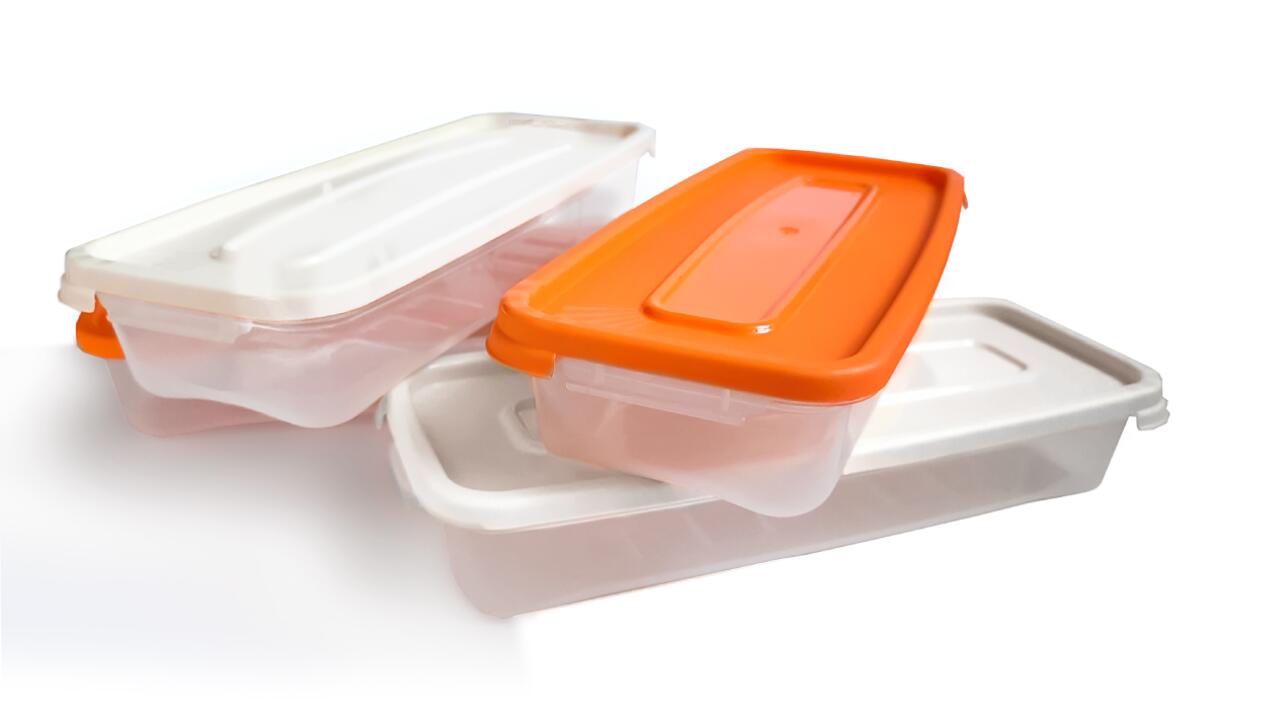
Types Of Food Storage Containers
Polycarbonate Food Containers
Polycarbonate containers are transparent boxes that offer versatile and practical storage for a wide range of products, I.E. food. They are shatterproof making them extremely safe. The see-through plastic allows you to easy identify and check stock, speeding up any stock or prep tasks. Being extremely space efficient, Gastronorm sized and resistant to temperatures as low as -40 degrees and as high as 100 degrees, and fit into all existing storage racks, fridges, freezers, and cooking appliances. They also have a feature of measurement marks too, which allows more accuracy when measuring foods and ingredients. Polycarbonate boxes are stackable with air-tight lids to maximise storage and keep food fresh.
Polypropylene Food Containers
These are 100% BPA free, stackable, have air-tight lids and resistant to temperatures between -40 to 70 degrees and are a more economical option compared to polycarbonate containers. They are gastronorm sized, easy to clean and give you sufficient storage as they fit in your already existing food preparation areas and storage. With them being translucent, it allows you to see the contents inside without having to open it. These are perfect for storing any foods, polypropylene tubs can be used in all kitchens, from restaurants to homes.
Graduated Food Containers
These containers are a great option. They allow you to monitor its contents without having to remove the lid, ensuring it stays fresh. With clear, bold measurements on the outside in litres and pints, they allow you to view your inventory which can help with saving waste and portion control.
Stainless-Steel Food Containers
Stainless-steel containers offer you durable, long lasting, and easy to clean food storage that provide versatile and practical properties as they can be used at every stage of food preparation. From fridge, to oven, to service, gastronorms are a must for any restaurant and catering environment. They come in a wide range of sizes and depths. Deciding on what pan is good for you is all dependant on what you will be cooking or storing, and they come in a variety of styles (normal, perforated, with or without handles and in deep of shallow designs). A shallow pan is a great option for serving potatoes at a self-serve buffet where-as a deep pan is better for sauces. There is also a wide range in lids that lock in heat and make the pans stackable. There is the choice of having holes in the corner of the lids for utensils; these are called notched lids. They all have handles which are shaped so stacking is still available. The thickness of the steel is called the gauge, the smaller the gauge, the thicker the piece of metal. This determines how durable and strong the pans are, meaning thicker pans are the appropriate option for constant use in a demanding kitchen. The standard gauge for a catering business is 22.
Material Thickness | 1.5MM | 1.4MM | 1MM | 0.8MM | 0.7MM | 0.5MM | 0.4MM |
Gauge | 16 | 18 | 20 | 22 | 24 | 26 | 28 |
TIP: By wrapping your food and containers with foil or cling film can increase the freshness of your food. Foils with the thickness of 0.0254mm are impermeable to oxygen and water, making them perfect for preserving food.
Ingredient Bins
Ingredient bins allow you to store large quantities of flour, rice or grains. They give you compact storage to help with storage space, whilst being easy to use and efficient. They are available with wheels which make it easy to transport and our made with strong plastics that resist constant use. They are simple to clean, ensuring you effortless food hygiene.
Preserve Jars
Preserve jars allow you to keep food fresh. They come with rubber rings to make sure they are all air-tight which are available to be replaced when they get worn out. Thanks to tough glass and metal clips, they are durable. These are often used in domestic kitchens, but can make front of house storage more decorative, such as behind bars or cake shops.
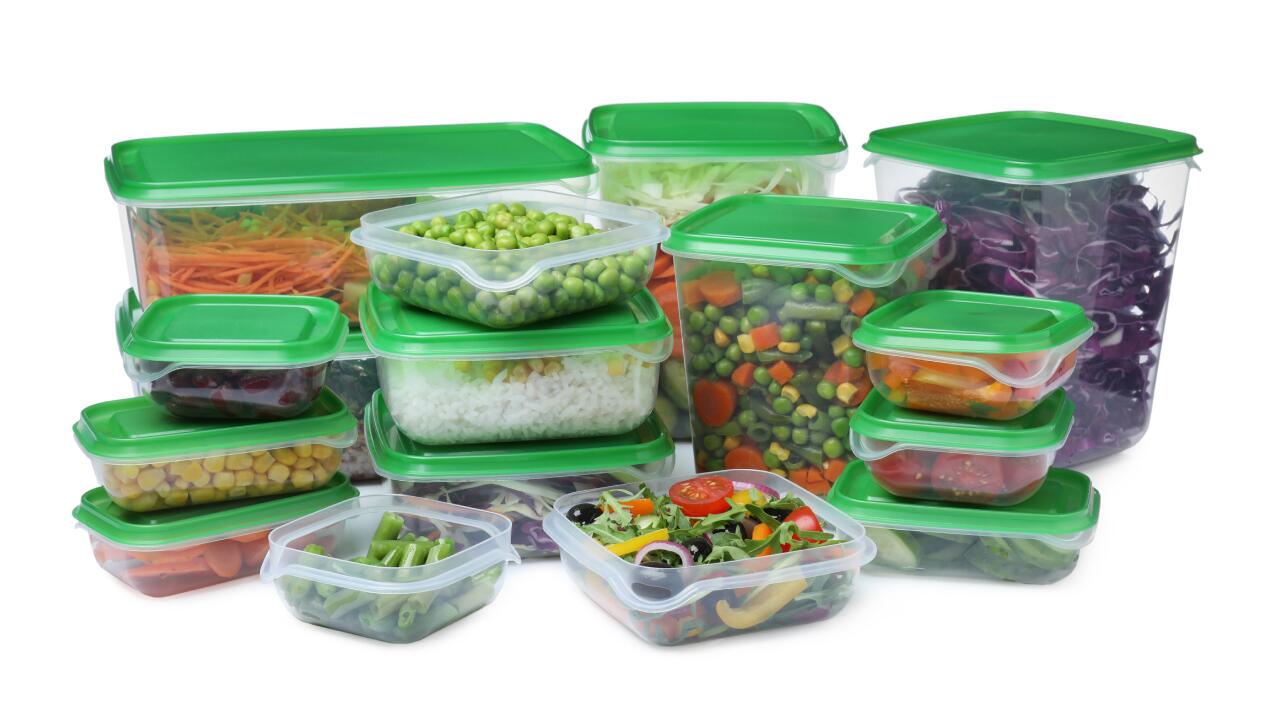
What Size Food Container Do You Need?
Food container come in a wide range of sizes available to suit your different purposes. This will help maintain efficient storage and a practical food service. They are available in 9 different sizes which each having up 6 different depths. The chat below shows the size of each as well as the capacity each one can hold.
Gn Size | Length (Mm) | Width (Mm) | Depth | |||||
20MM | 40MM | 65MM | 100MM | 150MM | 200MM | |||
2/1 GN | 530 | 650 | 5.4 ltr | 12 ltr | 19 ltr | 29 ltr | 43 ltr | 49.5 ltr |
1/1 GN | 530 | 325 | 3 ltr | 5.8 ltr | 9 ltr | 13.5 ltr | 20 ltr | 28 ltr |
2/4 GN | 530 | 162 | 1.2 ltr | 2.5 ltr | 4 ltr | 6.2 ltr | 9 ltr | 12 ltr |
2/3 GN | 354 | 325 | 1.35 ltr | 3.5 ltr | 5.5 ltr | 8.7 ltr | 13 ltr | 15.7 ltr |
½ GN | 265 | 325 | 1.2 ltr | 2.5 ltr | 4 ltr | 6.2 ltr | 9 ltr | 12 ltr |
1/3 GN | 176 | 325 | 660 ml | 1.45 ltr | 2.5 ltr | 3.7 ltr | 5.7 ltr | 7.5 ltr |
¼ GN | 265 | 163 | 530 ml | 1.13 ltr | 1.7 ltr | 2.5 ltr | 4 ltr | 5.2 ltr |
1/6 GN | 176 | 162 | - | - | 1 ltr | 1.7 ltr | 2.2 ltr | 3 ltr |
1/9 GN | 176 | 108 | - | - | 600 ml | 800 ml | 1 ltr | - |
Gastronorm allows you to be able to fit smaller sizes in to the larger ones, creating a system that allows for multiple foods to be stored, cooked, and served together. 1/1 GN is the most used size. This is because most fridges, freezers, storage units and cooking appliances have 1/1 GN shelving or racking sizes.
Shelving And Storage
After you have stored your food in the correct containers, you will need to find somewhere to store it. Some might suit you more than other, but there are a few different options to choose from. These include fridges, freezers, cold rooms, and shelving. Finding the right storage will help you to manage stock and speed up food preparation.
Shelving
Doesn’t matter what storage you go for, if it is properly organised, it will help businesses run a more efficient, productive, and safer operation. Stock room and kitchen shelving is available in a range of sizes and materials, but not every set is going to be appropriate for use as commercial food shelving. They need to be made of durable materials which are easy to clean. They often include a bacterial coating to help with the maintenance in between cleaning. Normally they come in both metal and plastic and each have advantages. Metal racks are the more expensive option, but they are extremely durable, easy to assemble and require less maintenance.
Fridge And Freezers
Fridges are used to keep your food fresh for longer. They are kept at safe temperatures, so they last longer than keeping in ambient storage, I.E. cupboards. When it comes to commercial fridges, they will keep your food cool even when the door is left open. Freezers on the other hand are designed to keep meats and other ingredients for long term storage. Many of these appliances are gastronorm compatible so you can store food efficiently.
GUIDE: There are many things to consider when thinking of purchasing a fridge or freezer, such as the size, capacity, and the brand. Our buying guides BUYING A COMMERCIAL FRIDGE and PICKING A COMMERCIAL FREEZER will help you pick the perfect unit for you.
Kitchen Cupboards
This provides easy access to most foods and ingredients. Made from a stainless-steel, they are easy to maintain and fit into just about any space you have to work with. If you think you are low on space, there is an option of having sliding doors. You can also have the option of free-standing cupboards or wall mounted. Free-standing cupboards can double up as counter space, giving you area to store cookware, appliances, and food. If your kitchen has limited floor space, you can go for a wall mount as this allows you to utilise your walls to create practical storage.
Insulated Food Transport
To make safe delivery of your food in transit, there are several options available depending on your storage needs. An example of this: if you are in need to transport gastronorm pans, insulated food boxes with rails can accommodate the pans securely and keep them at safe food temperatures for several hours. To extend this time, there are various accessories available, like a chiller and warmer plates that can be used with any need of power. To transport pre-boxed takeaway items, food delivery bags offer as a great solution and are suitable to any types of food. These bags use insulated panels to make sure the items stay hot until they get to the customers door. They are easy to clean with little to no maintenance, ideal for face-paced service where time is most precious. They also include an identity window and Velcro helping with a quick and easy opening. There are things to consider when choosing the correct food transporting bags or boxes that meets your needs.
Food Delivery Bags
Food delivery bags keep your food fresh and hot. These are versatile products which can carry for any delivery service. They offer a space for a variety of foods, including burgers, wraps, pizza, chips, and other sides.
Nylon Vs. Vinyl
Nylon or vinyl provide different benefits. Nylon is water resistant and is more breathable than vinyl, making moisture escape to help prevent food from becoming soggy. Vinyl on the other hand does not absorb any moisture and therefore is a lot easier to clean. As it doesn’t breathe as well as nylon, it is more suitable for shorter deliveries.
Insulated Food Boxes
These insulated food boxes are for specific needs able to hold gastronorm pans, beverages, and sheet pans in different configurations. While some of these carriers can be heated, others can be chilled or pre-warmed to extend cold or hot holding times further.
Holding Capacity
The most important thing to consider is the number of people you will be catering for. The UPCS400 FROM CAMBRO (CG140) hold roughly 180 servings. It is best to go for a container that can be filled to maximum capacity as this will keeps the contents warmer for a longer period of time.
Hot Holding Times
The amount of time you are able to keep food warm for is a crucial factor when looking for the right transport box for you. Cambro insulated containers are great as they are designed to maintain safe food temperatures for up to 4 hours. This can be extended by using camwarmer plates. Electric pan carriers allow for even longer hot holding times, providing insurance when the door is opened regularly for frequent access.
Design And Transport Requirements
It is a good idea to look at the dimensions of your food container to make sure it will fit securely in your vehicles. Do you know how far your boxes will need to be carried? Dollies are a fantastic option for wheeling your boxes up to your vehicle and for disembarking.
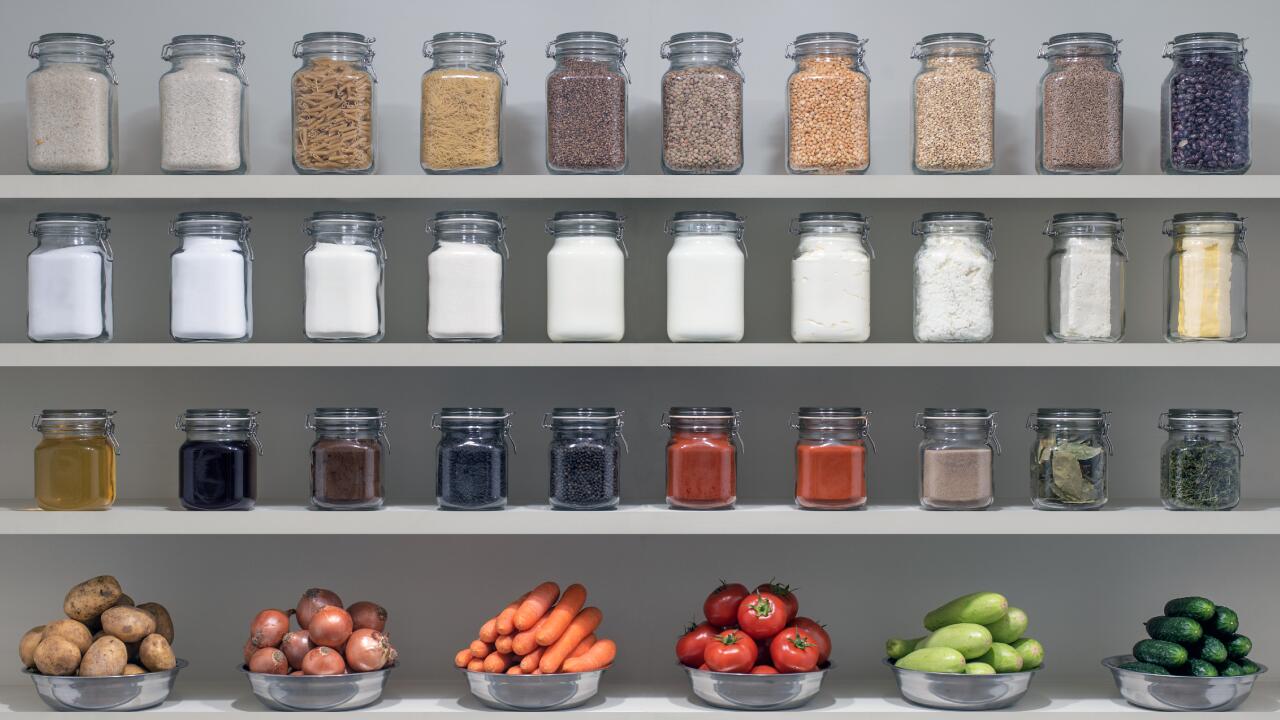
Four Steps for Maximum Performance
- Use shallow pans and covers. Pans with a depth of 65-100mm will retain safer food temperatures in hold holding and serving.
- Lids are an essential item. These are not only used to protect you and others from spillages but also reduce the risk of cross contamination. This will reduce the costs of wrap and foil, whilst ensuring secure stacking and storage to make the best use of your space.
- Minimise door openings. Help reduce the frequency of the door being opened by using labels or tags so containers can be easily identified without the door needing to be opened.
- Keep empty space to a minimum. Air cavities cause food temperatures to equalise. You can prevent this issue by keeping you carries a maximum capacity. Thermal barriers can also be used as a divider to increase hot holding times when there are spaces in your carrier.
Care And Maintenance
- To ensure best performance, clean lids, and vent caps.
- Clean your gaskets in hot soapy water, wipe with a soft cloth and dry thoroughly before next use.
- Use a food safe sanitiser to remove scents and stains from your food carriers.
Guide: For detailed information about any utensils, you could need in a commercial kitchen, see our utensils guide.